Blog. The research behind the measurement.
Research summaries, working notes from the analysis pipeline, and opinionated guides for riders who want to actually use what their camera captured.
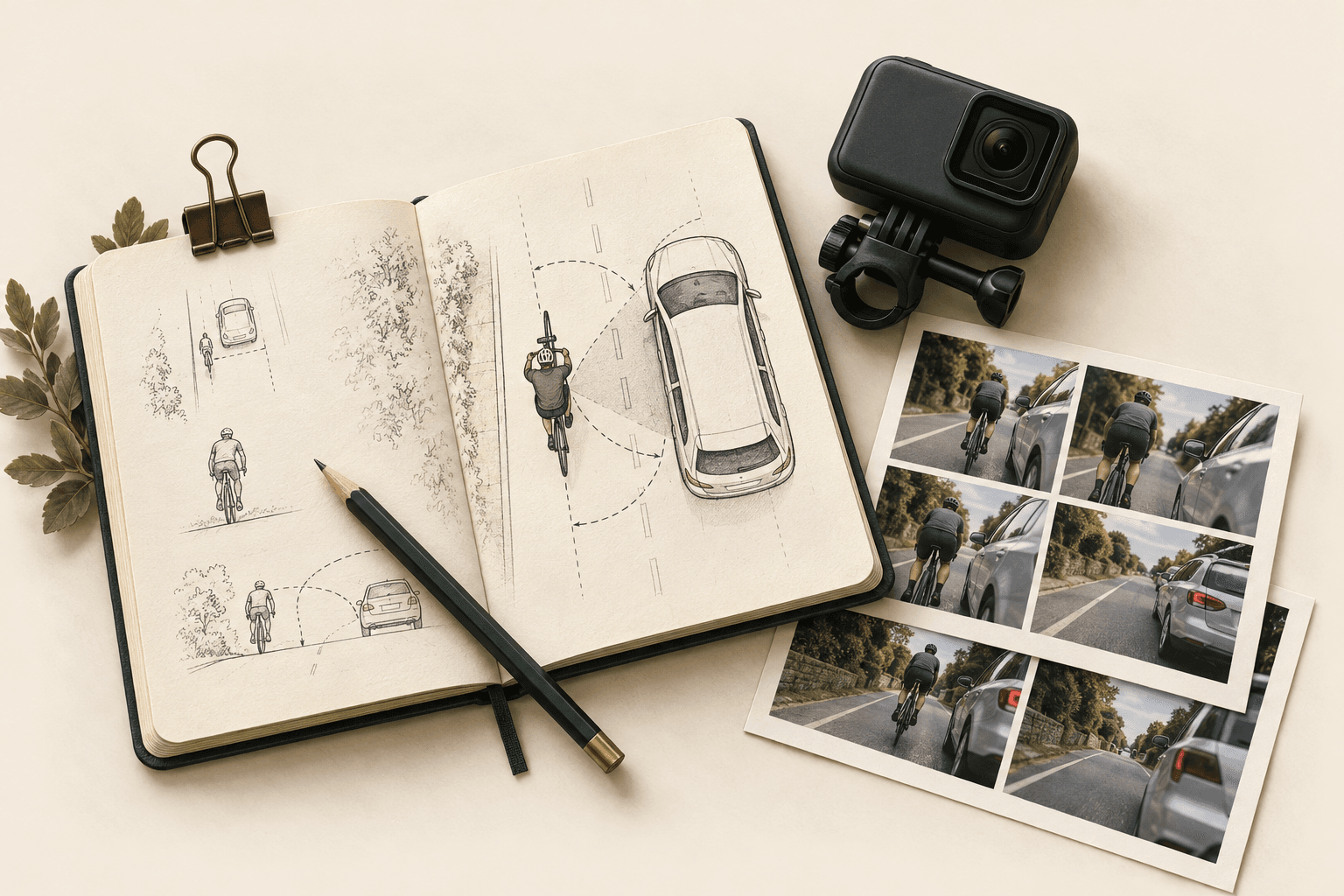
Two agencies counted last year’s cyclist deaths. They disagree.
NHTSA says 1,103. IIHS says 1,075. Both are drawing on the same federal crash file, and the gap is a lesson in reading any safety statistic.
Child cycling deaths fell 88 percent. Adult deaths rose fivefold.
Since 1975 the American cyclist most likely to be killed changed from a twelve-year-old to a fifty-year-old. Almost nothing about how we talk about cycling safety has caught up.
A cyclist in Louisiana died at fourteen times the rate of one in Maine.
Same country, same federal vehicle standards, same year. The state numbers are the strongest evidence that this is about places, not people.
Seven big American cities killed no cyclists at all last year.
Dallas, Fort Worth, Seattle, Denver, El Paso, Memphis and Milwaukee each recorded zero. That is the most useful number in the whole report.
Eighty-four percent were hit by the front of the vehicle.
Not clipped by a wing mirror. Not sideswiped. The driver drove into them, and that single figure reframes what a close pass actually is.
The average cyclist killed last year was 48 years old.
Not a courier, not a teenager. The age profile of American cycling deaths looks nothing like the stereotype, and that has consequences for who the road gets designed around.
Sixty percent of them were not at a junction.
The mental model of cycling danger is the intersection. The 2024 fatality data puts most deaths somewhere else entirely.
1,103 people. Reading the 2024 numbers honestly.
Cyclist deaths fell 6 percent last year. Injuries rose 6 percent. Both of those are in the same NHTSA release, and only one of them got reported.
Two Milligan riders were killed on a training ride.
A driver struck eleven cyclists on US 19E in Carter County, Tennessee on Wednesday morning. Here is what is known, and an honest account of what a camera can and cannot do about a road like that one.
Catherine Withrow was walking her bike.
A construction truck killed her at a Fort Collins intersection. In the federal crash data she will probably not be counted as a cyclist at all.
Why near-miss data matters more than crash data
Collisions are counted. Near misses are what riders actually experience, what changes their behaviour, and what almost nobody records.
Choosing a rear-facing camera for close passes
Most cycling cameras are built for making highlight reels. The specification that matters for evidence is a different one, and it is rarely on the box.
The driver who killed Francois Primeau did not stop.
A Santa Ana hit and run, and the uncomfortable fact that these cases are usually solved by somebody else's camera or not at all.
Is helmet-cam footage actually evidence?
Usually yes, and more readily than riders expect. What decides its weight is metadata, continuity, and whether anyone can tell it has not been altered.
How to actually report close-pass footage to the police
The submission process is genuinely different depending on where you ride. Here is what the route looks like in the UK, the US, and Australia.
What actually counts as a close pass?
Everyone recognises one when it happens. Turning that feeling into a number a police officer will act on is a different problem.
How often do drivers actually leave three feet?
Thirty-plus US states require it. The data on whether anyone follows the rule is grim, and inconsistent.
Lateral clearance is the right metric. Depth isn't.
Every public dashcam clip you've seen showing a close pass is reporting the wrong number. Here's why we don't.
Rural two-lane roads are where the worst passes happen.
Crash data and field studies say the same thing. The infrastructure conversation is mostly urban; the deaths aren't.
You filmed a close pass. Now what?
A short, opinionated guide to actually using your incident report when you talk to police or the driver's insurer.
Four years, and a request to leave after nine months.
The driver who killed Magnus White applied for early release in January. What happened next is an uncomfortable picture of how these cases actually end.