Make every rider measurably safer.
A driver passes close enough to move you. Ten seconds later they’re gone, and the whole thing has left no trace anywhere except your memory. We’re building the most accurate close-pass models cycling has ever had, so that moment becomes a number, and then putting them in a camera so the number becomes a warning.
The incident that leaves no trace.
Cyclists get killed and very nearly killed on ordinary roads, and most of it goes unrecorded. Not unnoticed by the rider — you notice. You remember the ones that came closest for years. Unrecorded by everyone else.
There is no witness. There is no report. Nothing enters any system that anyone will ever look at. By the time you’re home, the only evidence left is a story you tell, and a story is the one form of evidence that carries no weight.
So it happens, and it’s over, and nothing follows. Then it happens again next week, on the same road, to someone else.
A near miss is an event with no paperwork. That is exactly why nothing ever changes about it.
It isn’t apathy. It’s friction.
Riders don’t report close passes because reporting one costs more than most people have left after a ride that frightened them. Four reasons, in the order they stop you.
The footage is buried.
The pass took four seconds. Your camera recorded three hours. Finding the moment means scrubbing an entire ride you'd rather not watch again, and most people give up before they find it.
“Close” isn’t a number.
You know it was close. You can't say how close, and a report that says 'very close' is a report that goes nowhere. Without a measurement it stays your word against theirs, which means it stays nothing.
The card gets wiped.
Storage fills up, the card gets formatted, and the footage that would have mattered is gone before anyone asks for it.
One incident is just one incident.
Even a reported pass sits alone in a file. Nobody can see that the same junction keeps producing them, because nothing is counting. Patterns are what actually change roads, and no one is holding the pattern.
The most accurate close-pass models ever built for cycling.
Every problem above has the same root: “close” isn’t a number. So the first thing we build, and the thing we keep rebuilding, is the measurement. How close did it get, how sure are we, and who was it, answered automatically for every pass on every ride.
Accuracy is not a feature here; it is the product. A report only carries weight if the gap in it holds up when someone checks. A pattern on a junction only moves a council if the numbers are comparable from one rider to the next. And a live warning only helps if it’s right — one that cries wolf gets switched off.
So we measure ourselves the way we measure drivers: against ground truth, in public. We’ll publish how far off the models are, and keep making that number smaller.
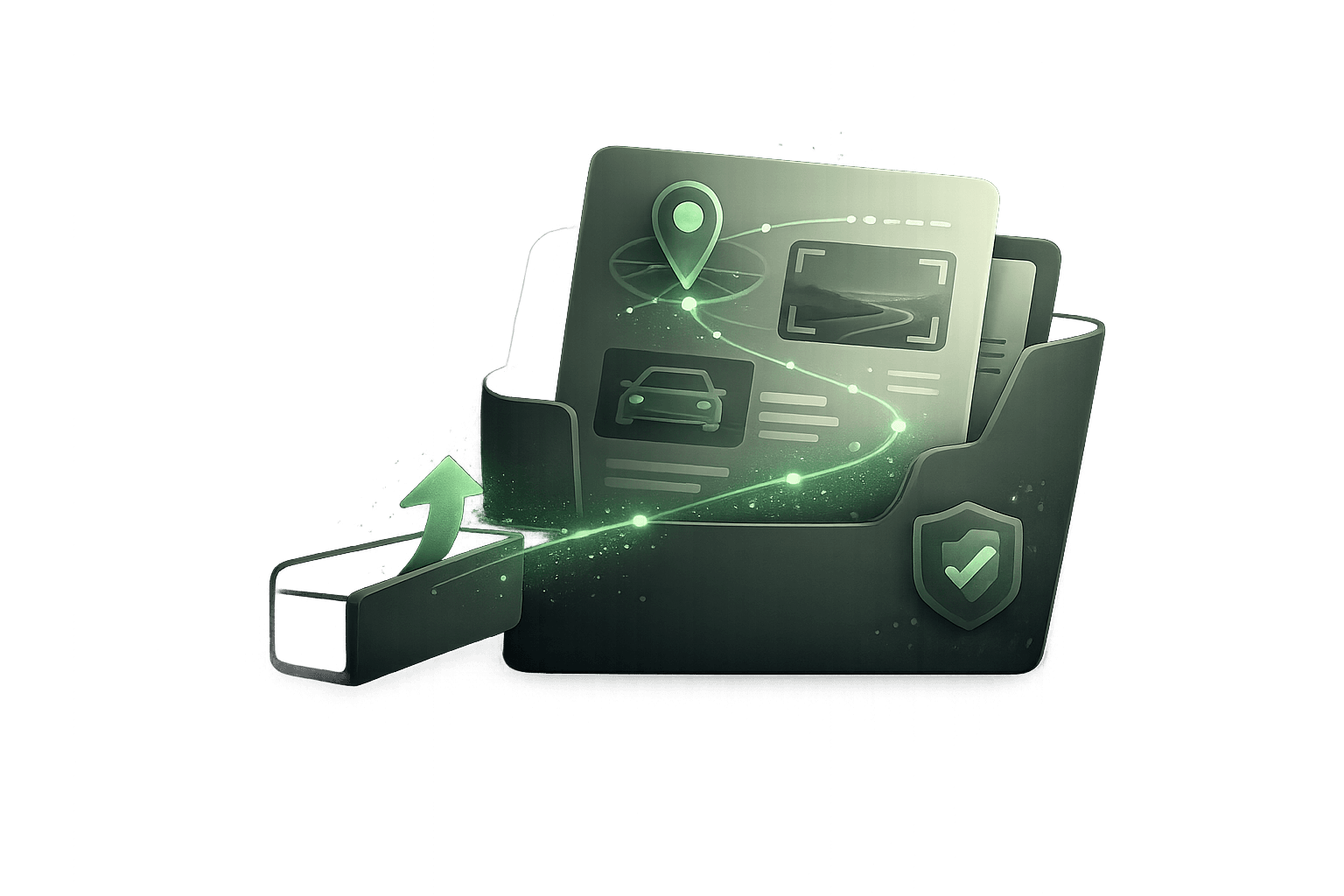
Four steps from footage to fewer crashes.
- 01
Measure
TodayUpload footage from the camera you already own. Review vehicle encounters, supported distance estimates and the details behind each report.
- 02
Validate
In progressCheck stored rider-reviewed cases, expand physical gap validation, and publish distance error when the evidence supports it.
- 03
Embed
In developmentDevelop a rear-facing camera with on-bike detection and alerts. Fall 2026 is the target; availability is not yet confirmed.
- 04
Prevent
The goalMake every rider who uses RydIQ measurably safer, and make close passes a number nobody can ignore.
Prevent the crash before it needs a report.
The goal is not a better filing cabinet. It is fewer cyclists getting hit: riders who use RydIQ ending up measurably safer than they were without it.
We won't put a percentage on that until we've measured it. When we have a real before-and-after figure, it goes here, with where it came from.
Four commitments we don’t trade away.
The rider does nothing
If documenting a close pass takes effort, it won't happen at scale. Upload is the entire ask: no calibration, no tape measure, no setup. Everything after it is ours.
A number, not an adjective
Every pass gets a measured clearance with a range around it, consistently, so one rider's report means the same thing as another's. Comparable numbers are what let incidents add up instead of piling up.
Honest about the error
We show how sure we are on every pass, and we'll publish how far the models are from measured ground truth. A number that hides its error isn't evidence.
It's your evidence
Your rides are yours. We don't sell footage, we don't use it to train models, and we don't hand it to anyone. When a report goes to the police, it goes because you sent it.
Start with your own rides.
The next close pass you have will be measured, documented, and yours to do something about. The camera follows in Fall 2026.